
Development board · Unlocked · Open-source firmware

GX5s: an ESP32 cellular development board.

An unlocked ESP32 cellular development board for vehicle and remote-equipment projects, with open-source firmware to start from. It reports over MQTT through a cellular modem and is designed never to drain the vehicle battery.

Open-source firmware Unlocked
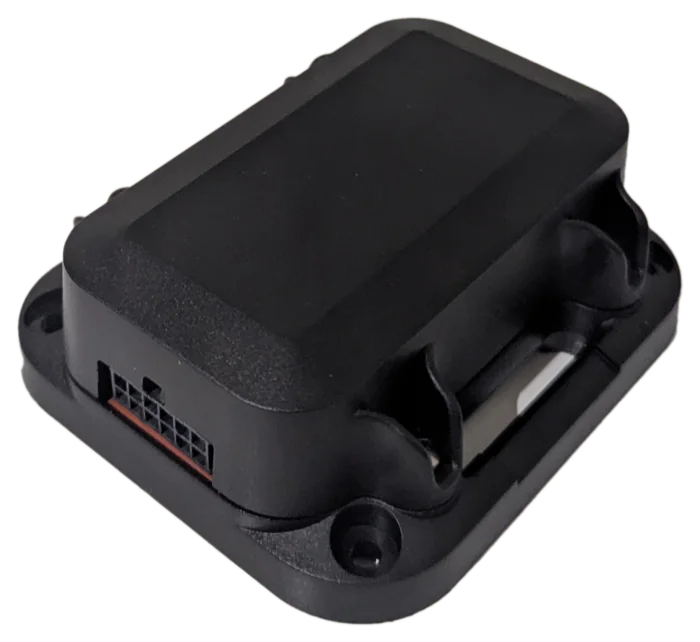
GX5s development board in its enclosure
Unlocked + open source

Your hardware, your firmware

Unlocked hardware

Flash your own firmware over the USB-C service port. No locked bootloader, no vendor lock-in.

Open-source firmware

The full ESP-IDF firmware source is on GitHub. Read it, change it, build it.

View on GitHub ↗
The board · v210620

Built for the vehicle harness

  • MCUESP32, 16 MB flash, 1 GB onboard SD NAND
  • Power9–36 V supply, ignition and voltage detection, external interrupt/wake; LiPo charging
  • HarnessMolex 2x6 Micro-Fit 3.0 — power, UART, I2C, CAN 2.0B
  • CellularMini PCIe modem slot (Quectel BG96 in the bench units)
  • SensorsMPU-6050 motion sensor, PCF8563 RTC, TCA9555 GPIO expander
  • ServiceUSB-C port (CP2102), status LEDs
The firmware · ESP-IDF 6.x

Event-driven, battery-safe, MQTT over cellular

Power

Protects the vehicle battery

Ignition on, it stays connected and sends telemetry: supply and LiPo voltage, motion, temperature and GNSS position. Ignition off, it reports, lingers for a bounded window, then deep sleeps with the modem still registered.

If the supply falls below a configurable cutoff it powers the modem down and deep sleeps, re-checking on a timer until the supply recovers.

Power states and wake sources →
Supply voltage over time: running with ignition on, lingering, sleeping, then protect mode once the supply drops below the cutoff Supply cutoff RUN · ign on LINGER SLEEP PROTECT wakes: ignition · motion · modem ring · timer
CAN 2.0B

Reads and transmits on the bus

OBD-II and J1939 modes send scheduled requests and decode the replies, including multi-frame messages. A listen-only mode receives without ever driving the bus.

Requests are configured remotely and kept on the device. Only values that change are published over MQTT.

CAN modes and requests →
The GX5s on a CAN bus with two ECUs: it sends a request, an ECU replies, and only changed values go out over MQTT GX5s ECU ECU CAN-H / CAN-L request reply MQTT: changed values only
Provisioning

Zero-touch provisioning

No credentials ship in the firmware. A new device connects anonymously to a bootstrap broker and announces itself; your backend replies with its login and location.

The device keeps the new login only if it connects with it, so a bad login never strands a unit. Five quick resets return it to factory state.

How provisioning works →
Provisioning sequence between the device and the broker: announce, login sent, reconnect with the stored login, telemetry GX5s Broker 1 · announce (anonymous) 2 · login + location 3 · reconnect with stored login 4 · telemetry
Expansion

Expandable by design

The Micro-Fit harness brings out power, ignition sense, an interrupt line, CAN, UART and I2C for your own sensors and devices.

Every line received on the external UART is published over MQTT, and you can send lines back. The firmware is open source, so drivers for your own I2C devices are yours to add.

Harness signals →
The 2x6 Micro-Fit harness connector, with the signal groups it brings out: power and ignition sense, interrupt, CAN, UART and I2C Molex Micro-Fit 3.0 · 2x6 9–36 V + ignition CAN 2.0B Interrupt / wake UART ⇄ MQTT I2C bus
Data

Offline queue and clock

When the broker can't be reached, telemetry is written to the 1 GB onboard SD NAND with an RTC timestamp instead of being lost.

The real-time clock sets the time at boot and is corrected from network time on every connect. Timestamps are UTC.

Telemetry, queue and clock →
Telemetry goes to the broker when it is reachable, otherwise to the SD NAND queue with an RTC timestamp; network time corrects the RTC Telemetry broker reachable MQTT offline SD NAND + RTC timestamp RTC ← network time · UTC

Factory reset: five quick resets erase the stored login, CAN setup and offline queue.

Buy the GX5 board or kit

Every board ships with the open-source firmware flashed and unlocked, so you can flash your own builds. Limited stock.

RIOT-GX5

GX5 board

  • GX5s board in its enclosure
  • Wire harness
  • Open-source firmware, unlocked

No modem or battery. Takes a Mini PCIe modem and a 3.7 V 1S LiPo (JST PH-2A).

View the GX5 board →
RIOT-GX5-KIT

GX5 Kit

  • Everything in the GX5 board
  • Quectel BG96MA LTE-M / NB-IoT + GNSS modem
  • External GPS + LTE antenna

Bring your own SIM (LTE-M / NB-IoT). No battery: takes a 3.7 V 1S LiPo (JST PH-2A).

View the GX5 Kit →

Fleet or volume order? Email hardware@reactiot.com.au · View on GitHub ↗